1. The original stays in the vault
We photograph it, record its real dimensions and condition, and keep the seller's description separate from what we've confirmed ourselves. It stays out of the light — light is what fades it.
Edo- and Meiji-era ukiyo-e prints, kept safe in a vault. The moment you own one, it hangs on your wall in AR, at its real size. Sell it, and it leaves your wall.
Join the waitlist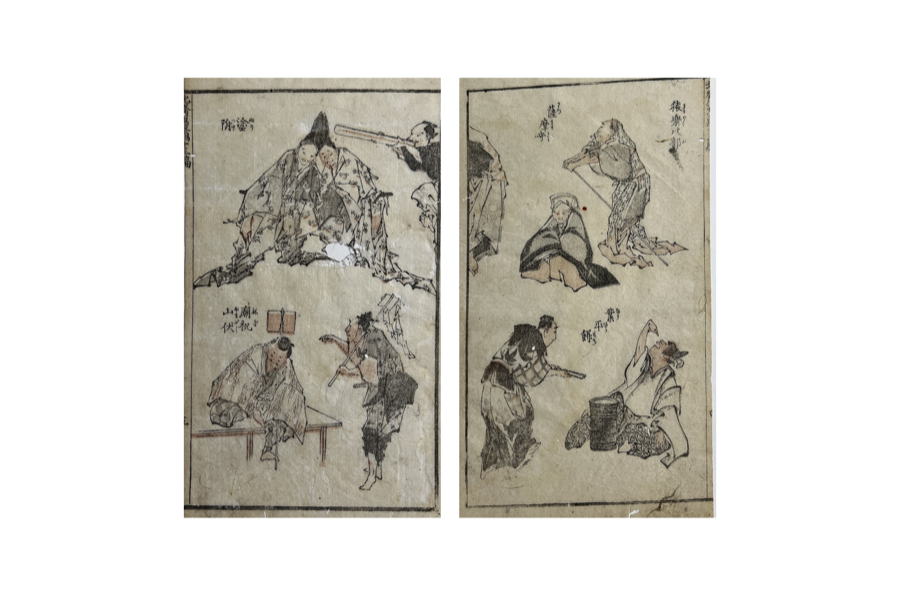 Original in vault
AR
Original in vault
AR
We photograph it, record its real dimensions and condition, and keep the seller's description separate from what we've confirmed ourselves. It stays out of the light — light is what fades it.
Point your iPhone at a wall and it hangs there, at its real size. Tap it to pull up its provenance — where it came from, and what's confirmed about it.
Transfer it and it disappears from your wall and appears on theirs — the print itself never moves. If you'd rather have the physical piece, you can request to redeem it from the vault.
Edo- and Meiji-era prints are a fixed, finite supply. Nobody is making more of them.
These prints fade under display light, which is exactly why keeping the original safe and displaying a twin makes sense.
Later reprints and reproductions are common. That makes it worth recording where a print came from and its condition today, separately from each other.
A pair of leaves attributed to Hokusai Manga, volume 13, bought in Jinbōchō, Tokyo. The volume title is printed in the margin. When they were printed is not yet confirmed — and we record it that way on purpose.
Twinfold records facts and evidence; it does not certify authenticity or condition. We keep three kinds of information separate:
Owner and transfer history — facts recorded on Solana.
Photos, real dimensions, and the dealer's own description.
Our best estimate — shown as unconfirmed until it's been verified.
Today Twinfold is a working prototype on Solana devnet. Nothing is for sale yet.